
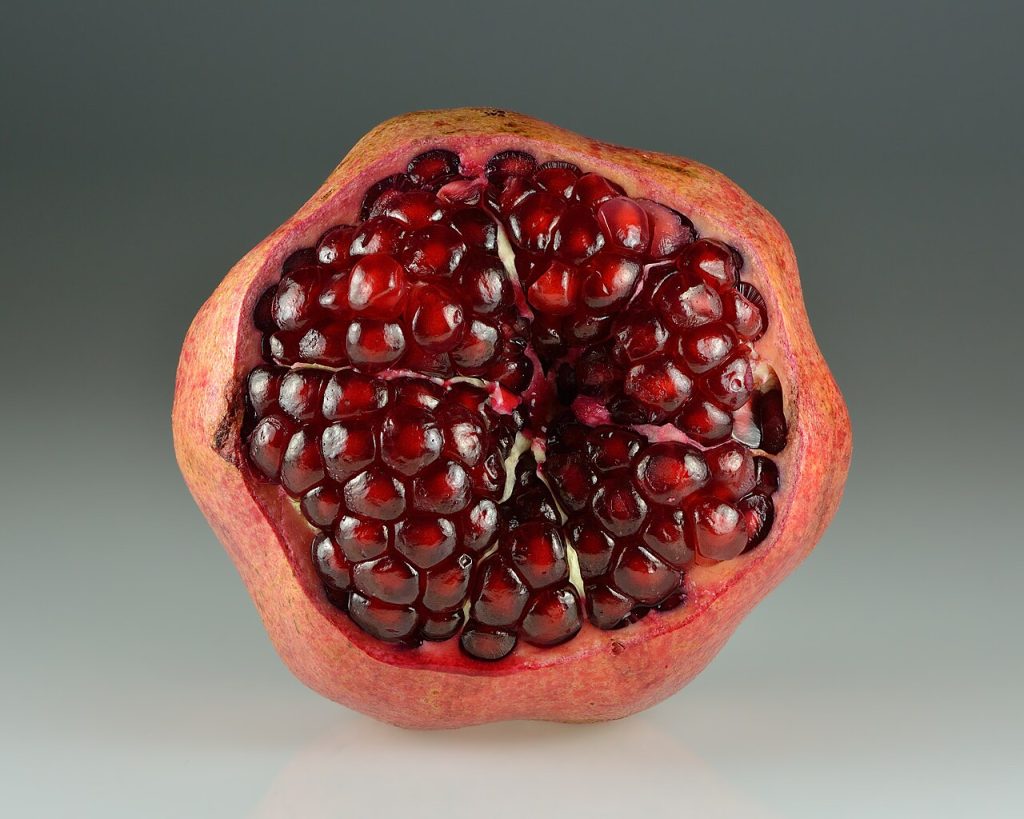
✓ Quick Scientific Takeaway
- Primary Bioactive: Punicalagin A & B, Ellagic Acid, Anthocyanins, Punicic Acid, and Gallic Acid.
- Physiological Target: Punicalagins hydrolyze in the gut into ellagic acid, fueling microbiome production of <strong>Urolithin A</strong>, while elevating serum paraoxonase-1 (PON-1) activity to hydrolyze lipid peroxides in arterial plaques.
- Evidence-Based Outcome: Human landmark clinical trials demonstrate 1 year of daily pomegranate consumption reduced carotid artery intima-media thickness (CIMT) by up to 30% and doubled serum antioxidant PON-1 capacity.
- Optimal Timing Protocol: Drink 4 to 8 oz of 100% pure pomegranate juice or eat 1/2 fresh pomegranate daily alongside main meals.
1. Biological Overview & Active Molecular Mechanisms
Pomegranate (Punica granatum) is revered in medical phytotherapy for its massive 100% water-soluble tannin complexes known as Punicalagins. Punicalagins possess a molecular weight exceeding 1000 Da, delivering over 90% of pomegranate juice’s formidable antioxidant capability and acting as the premier upstream precursor for mitochondrial-rejuvenating Urolithin A.
Punicalagins hydrolyze in the gut into ellagic acid, fueling microbiome production of Urolithin A, while elevating serum paraoxonase-1 (PON-1) activity to hydrolyze lipid peroxides in arterial plaques.
2. Evidence-Based Health Benefits & Clinical Research
1. Arterial Plaque Protection & CIMT Reduction
Upregulates PON-1 enzyme activity, shielding LDL cholesterol from oxidation and reversing arterial wall thickening.
NusaPure Pomegranate Extract 5000mg Polyphenol Complex
Punicalagin Ellagitannins for Vascular Integrity
2. Massive Hydrolyzable Tannin Potency (Punicalagins)
Delivers 3x the antioxidant potency of green tea and red wine, neutralizing severe vascular free radical cascades.
3. Mitochondrial Autophagy Activation via Microbiome
Provides abundant ellagitannin building blocks that colonic flora convert into longevity-boosting Urolithin A.
3. Clinical Specification & Dosage Reference Matrix
| Parameter | Clinical Standard & Specification |
|---|---|
| Primary Bioactive Complex | Punicalagin A & B, Ellagic Acid, Anthocyanins, Punicic Acid, and Gallic Acid. |
| Physiological Action | Punicalagins hydrolyze in the gut into ellagic acid, fueling microbiome production of Urolithin A, while elevating serum paraoxonase-1 (PON-1) activity to hydrolyze lipid peroxides in arterial plaques. |
| Validated Clinical Dosage | Human landmark clinical trials demonstrate 1 year of daily pomegranate consumption reduced carotid artery intima-media thickness (CIMT) by up to 30% and doubled serum antioxidant PON-1 capacity. |
| Nutritional Timing Rule | Drink 4 to 8 oz of 100% pure pomegranate juice or eat 1/2 fresh pomegranate daily alongside main meals. |
4. Frequently Asked Questions & Clinical Guidelines
Q: How long before noticeable biological effects occur?
While acute cellular absorption occurs within 30 to 90 minutes, systemic cellular saturation and biomarker improvements (such as lipid profiles, inflammation markers, and mitochondrial biogenesis) typically manifest over 4 to 12 weeks of consistent daily usage.
Q: What is the optimal water vs. lipid meal timing protocol?
Water-soluble nutrients and botanical extracts are best taken 20 to 30 minutes prior to meals with room-temperature filtered water, whereas lipid-soluble compounds should strictly be consumed alongside meals containing healthy dietary fats for optimal micellar absorption.
Q: Are there any contraindications or medication interactions?
Individuals taking prescription medications, pregnant/nursing mothers, or those with underlying renal or hepatic conditions should consult their licensed healthcare physician prior to initiating high-potency nutritional supplementation.