
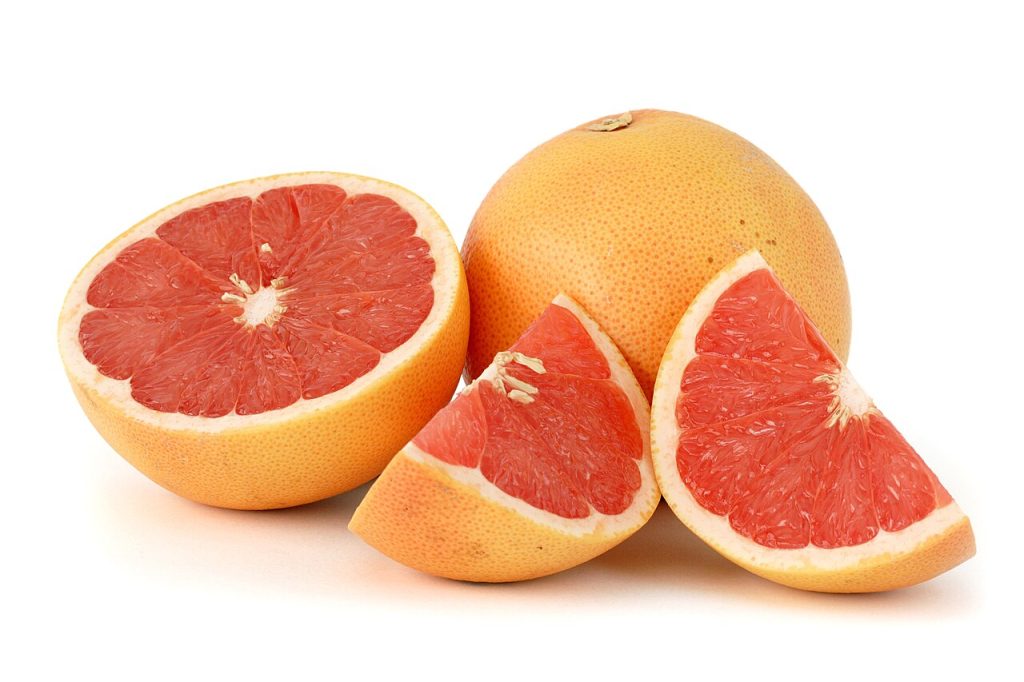
✓ Quick Scientific Takeaway
- Primary Bioactive: Naringenin, Naringin, Lycopene, Vitamin C, and Potassium.
- Physiological Target: Naringenin activates <strong>AMPK and PPAR-alpha</strong>, mimicking the metabolic effects of exercise and fasting by stimulating liver fatty acid breakdown and suppressing gluconeogenesis.
- Evidence-Based Outcome: Human clinical metabolic trials show consuming half a fresh grapefruit before meals three times daily led to significant weight reduction (1.6 kg over 12 weeks) and significantly improved 2-hour postprandial insulin sensitivity.
- Optimal Timing Protocol: Eat 1/2 fresh pink grapefruit 15 minutes before breakfast or lunch (Note: check medication interactions due to CYP3A4 inhibition).
1. Biological Overview & Active Molecular Mechanisms
Grapefruit (Citrus paradisi) provides a concentrated dose of the bioflavonoid Naringin, which colonic bacteria cleave into active Naringenin. Naringenin acts directly on hepatocytes, reprogramming lipid metabolism toward mitochondrial fatty acid oxidation and away from de novo lipogenesis.
Naringenin activates AMPK and PPAR-alpha, mimicking the metabolic effects of exercise and fasting by stimulating liver fatty acid breakdown and suppressing gluconeogenesis.
2. Evidence-Based Health Benefits & Clinical Research
1. AMPK & PPAR-Alpha Activation in Hepatic Tissue
Forces liver cells to burn triglycerides for cellular fuel rather than storing them as ectopic visceral fat.
2. Postprandial Insulin Sensitization & Satiety
Lowers fasting insulin levels and moderates blood glucose excursions when consumed prior to carbohydrate meals.
3. Lycopene & Vitamin C Cellular Defense Matrix
Guards lipid membranes from oxidative stress, enhancing microvascular capillary resilience and collagen formation.
3. Clinical Specification & Dosage Reference Matrix
| Parameter | Clinical Standard & Specification |
|---|---|
| Primary Bioactive Complex | Naringenin, Naringin, Lycopene, Vitamin C, and Potassium. |
| Physiological Action | Naringenin activates AMPK and PPAR-alpha, mimicking the metabolic effects of exercise and fasting by stimulating liver fatty acid breakdown and suppressing gluconeogenesis. |
| Validated Clinical Dosage | Human clinical metabolic trials show consuming half a fresh grapefruit before meals three times daily led to significant weight reduction (1.6 kg over 12 weeks) and significantly improved 2-hour postprandial insulin sensitivity. |
| Nutritional Timing Rule | Eat 1/2 fresh pink grapefruit 15 minutes before breakfast or lunch (Note: check medication interactions due to CYP3A4 inhibition). |
4. Frequently Asked Questions & Clinical Guidelines
Q: How long before noticeable biological effects occur?
While acute cellular absorption occurs within 30 to 90 minutes, systemic cellular saturation and biomarker improvements (such as lipid profiles, inflammation markers, and mitochondrial biogenesis) typically manifest over 4 to 12 weeks of consistent daily usage.
Q: What is the optimal water vs. lipid meal timing protocol?
Water-soluble nutrients and botanical extracts are best taken 20 to 30 minutes prior to meals with room-temperature filtered water, whereas lipid-soluble compounds should strictly be consumed alongside meals containing healthy dietary fats for optimal micellar absorption.
Q: Are there any contraindications or medication interactions?
Individuals taking prescription medications, pregnant/nursing mothers, or those with underlying renal or hepatic conditions should consult their licensed healthcare physician prior to initiating high-potency nutritional supplementation.